
If you’re building or redesigning a website, you’ve probably heard the term “SEO friendly” thrown around a lot. It’s a reassuring phrase, one that suggests your website will be discoverable by search engines and attract plenty of visitors. But here’s the truth: an SEO friendly website is just the starting point. It’s not the finish line.
As a team that builds websites, we make sure every site we launch is SEO friendly. But that doesn’t mean they’re fully SEO optimised – at least, not yet. That’s why we want to break down the difference between the two and why it matters, especially if you want your site to show up in front of customers (and stay visible) in search results.
What Does “SEO Friendly” Actually Mean?
A website that is SEO friendly has the basic elements in place to be found by search engines like Google and Bing.
Here are some common features of an SEO-friendly site:
- Mobile responsive design
- Fast loading times
- Secure (HTTPS)
- Proper use of heading tags (H1, H2, etc.)
- Clean, crawlable code
- Metadata fields for titles and descriptions
These things are essential – they give search engines a solid foundation to understand what your site is about. But they’re not enough to compete for visibility and organic traffic.
What Does SEO Optimised Mean?
SEO optimisation goes beyond just setting things up right. It’s about making your site perform, and keep performing, as algorithms evolve and competition increases.
An SEO optimised website is actively maintained and improved over time. It involves:
- Targeted keyword research and implementation
- High-quality, relevant content creation
- Regular updates to improve and expand content
- Earning backlinks from reputable sources
- On-page SEO amendments based on analytics and performance
- Monitoring for technical issues (like broken links or slow pages)
- Adapting to changes in Google’s algorithm
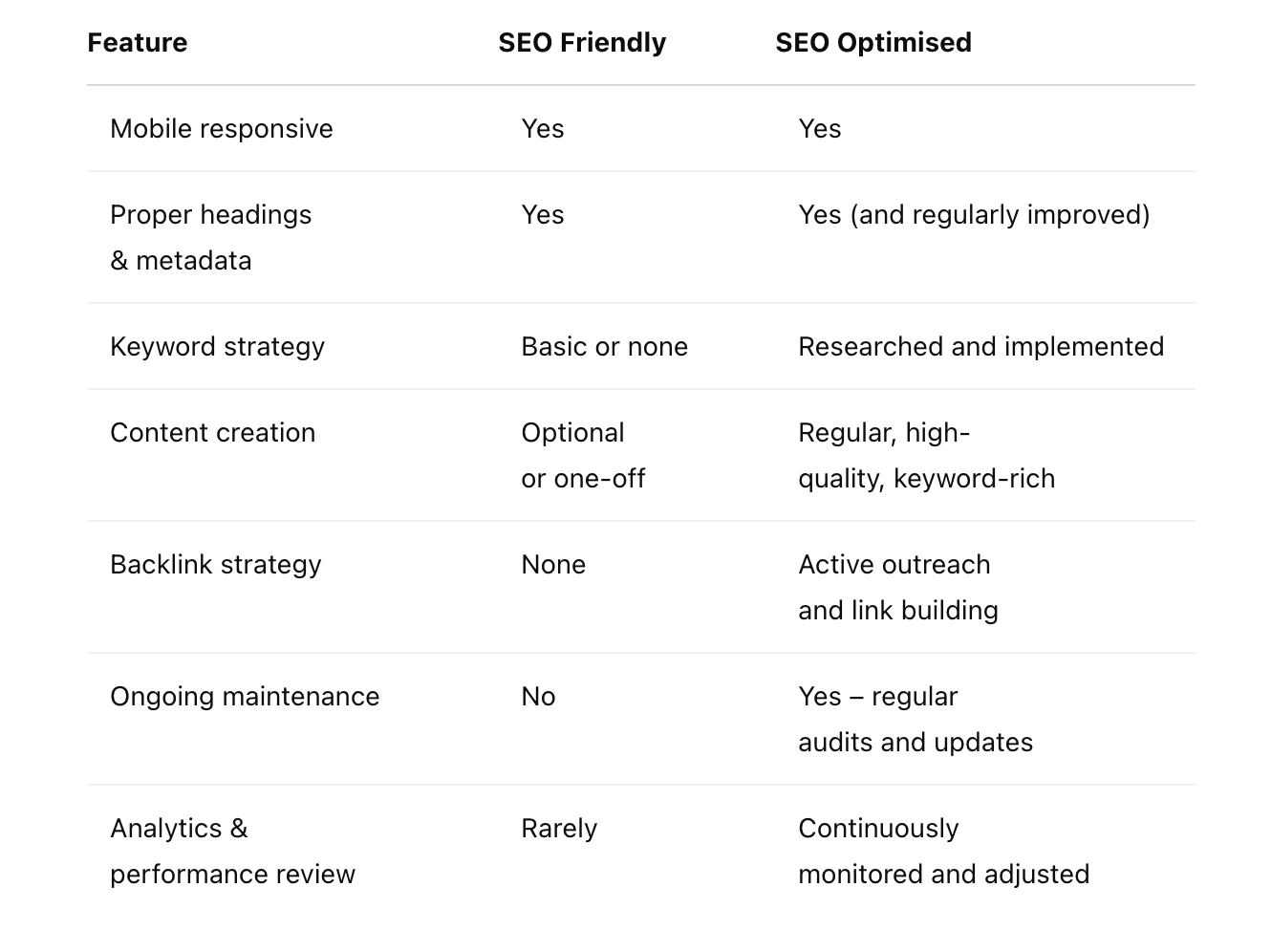
The Key Differences: SEO Friendly vs. SEO Optimised
Why Does This Matter?
Having an SEO friendly website is like getting your foot in the door – it’s crucial, but it won’t carry you far on its own. With billions of websites online, you need to go further to actually stand out.
Here’s a quick example:
Let’s say you’re a local florist. You have a beautiful website that loads quickly and works well on mobile. Great start! But your competitors are publishing weekly blog posts about seasonal flower care, optimising their pages for “wedding bouquets London,” and getting links from wedding blogs. Without that ongoing work, your site will struggle to keep up – even if it’s technically “SEO friendly.”
SEO Is Not One-and-Done
The reality is, search engines reward relevance and authority. That only happens with consistent effort:
- Updating content to reflect current trends
- Adding new pages or blog posts regularly
- Improving internal linking and site structure
- Earning links from other trusted sites in your niche
So, What’s The Next Step After a Website Build?
At the end of the day, an SEO friendly website is a great first step – it means your site won’t get in its own way. But if you want to see real, measurable results in traffic, leads, or sales, you need to invest in SEO optimisation along with a strategic content plan that continues to grow your website.
You can find out how your website it performing overall by completing an SEO audit. We offer FREE website audits so you can better understand the next steps needed become a SEO-optimised website.
That doesn’t mean it all has to happen at once. But it does mean understanding that SEO is not a checkbox, it’s an ongoing process of learning, testing, and improving. And for businesses that want to be found, that’s not just worth it – it’s essential.
The form takes around 7 minutes to fill out. Access it by clicking the button below.